
Most of the time, we hear people want to start their fitness journey. But they stop themselves by thinking that they lack proper equipments, machines, and more importantly, they have a shortage of time to join a gym membership.
But they didn’t know that we, as personal fitness trainers at Basics and Beyond fitness and nutrition, also start our clients’ fitness journeys with bodyweight exercises, rather than making them directly dependent on machinery and equipment.
And no doubt, you too must be wondering, what is this ‘bodyweight training’?
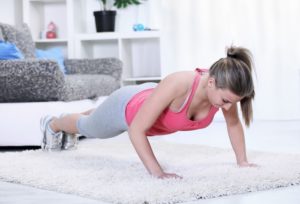
Bodyweight training includes movements where your body becomes the resistance instead of dumbbells, barbells, machines, or any other equipment. Basically, you use the weight of your body to work your muscles and build strength.
These exercises usually involve basic, functional movements that many people already recognise. For example, when you do a squat, your legs and glutes are working to lift and control your body. During a push-up, your chest, arms, and core support your body against gravity.
Now, the question is, what are the benefits of doing bodyweight exercises?
One reason bodyweight exercises remain popular is their simplicity. Without needing machines or heavy equipment, they allow people to focus on how their bodies move and respond to different movements. With regular practice, this approach can bring several noticeable benefits.
Bodyweight exercises can be done anywhere
The biggest advantage of bodyweight exercises is that you can do them anywhere, anytime. For example, if you do squats, pushups, lunges, or planks, you can perform them anywhere in your home, garden, or living room. You don’t necessarily need to set aside special time to do it; these can be done during breaks or lunchtime. This convenience helps people to stay consistent with their workouts.
Bodyweight exercises improve balance and coordination
Bodyweight exercises activate multiple muscles at once. When you do a plank, the pressure is placed on your shoulders and lower body. However, when you do squats, the pressure is primarily on your thighs and feet. This helps to keep the body in coordination and balance even though it is in motion, and along with this also builds strength and endurance in muscles.
Bodyweight exercises reduce injury risk in beginners
When beginners start, they often lift too much weight in pursuit of quick results but end up with injury or strain. However, when beginners start exercising with their own bodyweight, their chances of injury are reduced, and over time, they can adjust their intensity accordingly. For example, they start with incline push-ups. When they feel they can increase the intensity further, they can do push-ups to make it more challenging.
Here Are Some Common Bodyweight Exercises You Can Try
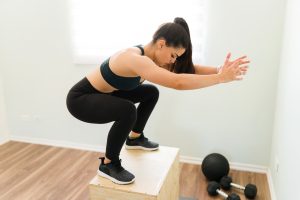
Squats
Squats are one of the most basic lower-body exercises. This exercise also improves stability, primarily hitting the quadriceps, hamstrings, and glutes in the process. Regular squats help improve leg strength and support everyday movements like sitting and standing.
Push-ups
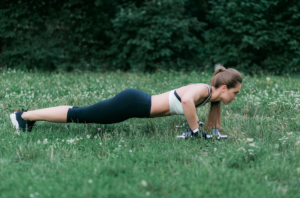
Push-ups are a commonly recognised upper-body workout that focuses on the chest, shoulders, and arms. The core muscles also keep the body stable, making push-ups useful for building overall upper-body strength.
Lunges
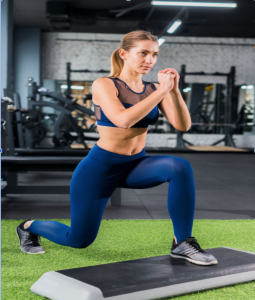
Lunges develop lower-body strength and stability through balance training. Lunges also improve coordination since the motion requires taking a step forward or backward while controlling it.
Planks
Planks focus on core strength and improve posture. The abdominal muscles, lower back, and shoulders work in harmony together to keep the plank position stable.
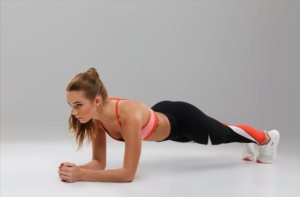
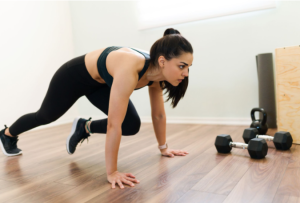
Mountain Climbers
People who participate in mountain climbing perform strength training along with a cardio component. While the body stays in a plank position, the legs move quickly underneath, helping engage the core and increase heart rate.
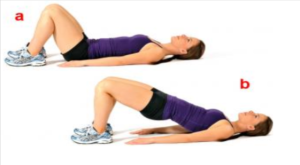
Glute Bridges
Glute bridges mainly target the glute muscles and lower back. By lifting the hips while lying on the floor, this exercise helps strengthen the posterior chain and improve hip stability.
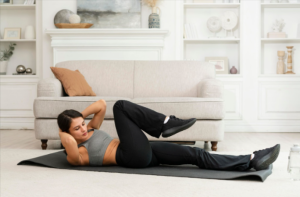
Crunches
Crunches are a popular exercise used to work the abs. The exercise involves lifting the upper body slightly from the ground, helping to strengthen the core and provide better stability.
Common Mistakes that people make while doing Bodyweight Exercises
Bodyweight exercises seem easy, but if you do them wrong, they may not be effective. Sometimes, they can hurt you, too. Beginners often commit a few common errors:
Speeding with repetition
People attempt to complete exercises as fast as possible. While speed may feel like a good way to finish a workout faster, rushing often leads to poor form. Muscles usually work better when moves are slower and more controlled.
Ignoring Appropriate Form
Squats, push-ups, and lunges are heavily dependent on correct posture. For instance, allowing the knees to go too far forward while squatting or dropping the hips too low while planking may put certain joints in a compromised position. If you pay attention to the shape of muscles, you can get the right outcome.
Not warming up
Some beginners dive right into workouts without properly warming up their muscles. Warming up with light movements or stretching can prepare the body for exercise and potentially keep it from becoming stiff or strained.
Doing the same repetition every time
Using the same exercises with the same number of repetitions for weeks may slow down the progress. As the body becomes habituated to a particular exercise or stimulus, it usually requires small changes, like more reps or extra sets, to continue the improvement.
Excessive Training Without Taking a Break
It is also a common mistake to attempt an exercise daily without allowing the body enough time for recovery. Rest days are important because they allow your muscles to repair and strengthen, which is a part of any training routine.
Conclusion
Bodyweight workouts also serve as a reminder for people that fitness does not have to feel hectic. A short routine at home can be a meaningful step toward good health and long-term well-being, if used correctly. Squats, push-ups, lunges, planks, and more may seem basic, but when done with regularity, they gradually build strength, balance, and confidence in your body.
We, the certified personal fitness trainers at Basics and Beyond fitness and nutrition, work with individuals to develop the fundamentals first for those with little experience and no basis of training. When you build on the basics and grow gradually, then it gets easier to build a routine that appears manageable and effective.
FAQ’s Frequently Asked Questions
Ques. 1. I want to start bodyweight training, but I’m not sure where to begin. What should I do?
Ans: You can start with a simple routine that includes squats, push-ups, lunges, and planks, which can be helpful. Many beginners also prefer guidance from certified fitness trainers at Basics and Beyond fitness and nutrition, who can create a routine based on individual fitness levels.
Ques. 2. I don’t have access to a gym. Can I still build strength with bodyweight exercises?
Ans: Yes. Exercises like squats, push-ups, lunges, and planks use your own body as resistance and can be helpful in building strength, especially for beginners. With guidance from certified fitness trainers at Basics and Beyond fitness and nutrition, these movements can be structured into an effective routine.
Ques. 3. I find push-ups and squats very difficult as a beginner. What should I do?
Ans: You can start with easier variations, such as knee push-ups or supported squats. A certified fitness trainer can also guide you on form correction and progression so that the exercises become easier and safer over time.
Ques. 4. I sit for long hours during the day. Which bodyweight exercises can help?
Ans: Exercises such as glute bridges, lunges, and planks can help activate muscles that become inactive during long sitting hours and support better posture.
Ques. 5. I tried following online workout videos, but I’m not sure if my form is correct. How can I improve it?
Ans: Although watching online videos can help, it is easier to understand correct posture and movement with professional guidance. You can try it in front of a mirror and observe whether you are doing it properly or not. But it’s suggested to work with certified fitness trainers who can observe your technique and suggest adjustments to make the exercises safer and more effective.