
Many women like to start their fitness journey with a female fitness trainer. Because they go through more than they share with anyone on topics like periods, mood swings, hormone imbalance, postpartum recoveries, or even menopause. However, when they consult this with a female, they feel a sense of more understanding and less awkwardness.
They don’t want anyone to judge them based on whether they are a beginner, someone who is getting back after a long time, or simply someone who is trying to feel better in their own body right now.
And this kind of comfort? It creates a big difference.
Because when they are comfortable with their surroundings, they will likely be more open and frank in asking questions and remaining constant. And in the long run of a fitness journey, this consistency is what really leads to progress.
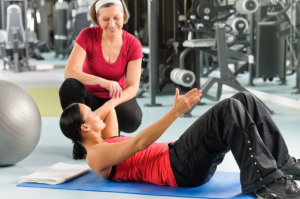
Why Fitness Feels Different for Women (And Often More Complicated)
For many women, fitness is not just about showing up and doing a workout. There are a lot of things that go on in the back of their mind, doubts, thoughts, and discomforts that they often don’t talk to anybody else about. Here are some major concerns that arise:
1. Social discomfort or judgment in gyms
Sometimes, when a woman walks into a gym for the very first time, a strange kind of feeling pops up in her mind about whether anybody is judging her while working out. And if she is a beginner and doesn’t know the exact form of performing an exercise, a feeling of discomfort also arises.
2. Body Image Pressure
There is constant pressure around body image. Mainly for teens who are in their puberty stage, they want to have a slim and curvy body. And wants frequent and quick results, but when results don’t come quickly, it starts to feel discouraging. It stops being something positive and gradually turns into a feeling of pressure.
3. Lack of guidance and confusion due to too much online advice
When women are in a race to get their dream body, they start to follow extreme diets and chase high-intensity workouts that are not suitable for their body’s needs. Rest assured, it’s social media, which spits out thousands of quick transformation plans that lead them to a state of confusion. This results in a loss of energy levels, with nutrients providing no positive response in the body. Trying different workout and diet plans in the same period of time leads to a situation where one cannot understand what is working for their body and what’s not.
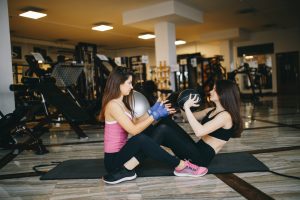
How a Female Fitness Trainer Can Change the Entire Experience
Before getting into specific benefits, it’s important to understand that the difference is not always very obvious, but you can feel it. The approach, the communication, and the level of comfort can change how you feel about fitness altogether. And that’s where a female personal trainer often makes a real difference.
1. Comfort and Understanding
Having a female personal trainer makes communication more open and easier. You always feel free to ask for anything without a second thought. For example, if there is a woman who has started her fitness journey after years, and another girl is starting her gym for the first time, both of them may be unsure about what to use in terms of equipment. She may not be comfortable with a male trainer asking the “basic” questions. That first barrier falls so much more quickly with a female fitness trainer.
2. Understand your body beyond just workouts
It’s a well-known fact that no two human bodies have the same bodily response and the same working and effectiveness of a routine. There are days when you feel low energy, different in your body, or like you are not progressing. Sometimes it’s linked to things like hormonal changes, mood swings, or just how your body is feeling that week. This is equally helpful in situations like postpartum recoveries and menopause. A female fitness trainer will focus more on strength building and recovery rather than rushing a new mother directly into intense workouts. The same happens in the case of menopause. Fluctuation in weight, joint ache, and demotivation are common experiences at this phase. You will have to explain very little to a female fitness trainer, who is likely to understand that situation. It’s not just about pushing harder; it’s about knowing when to slow down, adjust, or try a different approach.
3. Communication Factor
Communication is also another area where the difference is shown. There are many situations where women are not comfortable speaking aloud. Like discomfort during certain movements, feeling awkward in specific exercises, or even struggling with body image. For example, a woman is uncomfortable doing certain glute exercises in an open gym area but feels hesitant to say it directly to a male trainer. With a female fitness trainer, she is more likely to openly say, “I’m not comfortable doing this here. ” And the trainer can quickly modify the workout or shift to a more private space.
4. Women’s specific training sessions
When we talk about women-specific training, it also concerns understanding how a woman’s body functions in various phases of life. For example, a woman who is struggling with PCOS may struggle with weight fluctuations, although she is putting in efforts. Or someone going through postpartum recovery may not have the same strength and energy levels as before. In such cases, a female trainer is more likely to offer workouts suitable for the realities. Changing the intensity of workouts on certain days of your menstrual cycle can be highly beneficial. It’s less about following a set pattern and more about cooperating with the body rather than opposing it.
5. Goal-oriented approach
A goal-oriented approach also feels different when it comes from someone who understands what those goals actually mean to a woman. For example, not every woman wants extreme weight loss or intense muscle gain. Some people just wish to feel more active and fit into their clothes without difficulty. Others want to get their confidence back after a life change, like childbirth or a stressful period in their life. A female trainer is often more mindful of these personal goals. Instead of saying “you need to lose this much weight,” the focus shifts to “let’s build strength, improve energy, and make you feel better day by day.” That shift in approach makes the journey feel less pressuring and more sustainable.
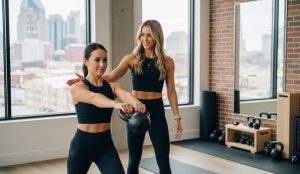
Conclusion
At the end, selecting a female fitness trainer is not about workouts or exercises; it’s about how you feel throughout your fitness journey. Having a fitness trainer makes this journey doable and convenient by helping you understand your body and energy levels and customize a fitness plan that fits your lifestyle.
At Basics and Beyond fitness and nutrition, our female fitness trainers like Libby Carlson, Amy Lamb, and Debora Allegranti listen, adapt, and push you to be career consistent; that’s when the real change happens. Fitness does not have to be hard. With the right guidance and support, it can actually be something you look forward to, a journey that’s designed just for you.
Our certified female fitness trainers provide their services in and around Nashville, locations like Green Hills, Vanderbilt, Belmont, and Hillsboro Village.
FAQs: frequently asked questions
Ques. 1: Can a female fitness trainer help me with strength building? Or should I go to a male trainer?
Ans: Strength training isn’t about a trainer’s gender; it’s about their approach. A female fitness trainer can guide you through proper form and build your strength in a way that feels safe and sustainable.
Ques. 2: I feel nervous about using weights in the gym. Can a female fitness trainer help with that?
Ans: Yes. A lot of women avoid the weight section because it feels overwhelming. A female fitness trainer usually takes the time to walk you through each exercise and correct your posture without making you feel awkward.
Ques. 3: I don’t just want to lose weight. I want to feel stronger in daily life. Can a female trainer help with that?
Ans: Definitely. A female fitness trainer often includes functional training that helps in real-life activities like lifting, bending, or even improving stamina. The goal is not just looking fit but actually feeling strong in everyday routine.