
Are you also one of those people who think strength training is just about muscular development (i.e., larger arms, stronger legs) and a physical change in appearance?
But that’s not the case. Let me explain to you. Strength training is not just about getting bigger muscles. It’s about getting stronger and healthier, both physically and mentally. The aesthetic changes are a nice bonus, but they’re just a small part of the bigger picture.
When beginners start strength training, they usually notice some interesting changes in the first few weeks, such as being able to lift heavier weights or perform movements more easily. The reason for these advancements will not be due to muscle development; it will be the individual’s ability to learn to activate the muscles they already have.
To know what exactly strength is, you must have an understanding of the system that provides the control behind the scenes, “The nervous system.”
Understanding the Nervous System
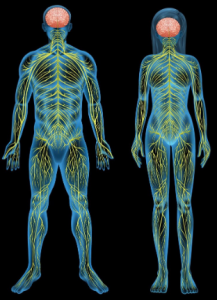
The nervous system is the human body’s communication system. It provides control for all voluntary movements. It has two major components: the central nervous system (CNS), made up of the brain and spinal cord, and the peripheral nervous system (PNS), composed of nerves running between the CNS and all parts of the body.
What Actually Happens in Your Body When You Lift Weight

It all starts with a simple thought: “Let me lift this.”
But behind that one-second decision, your brain is already doing a surprising amount of work. Instantly, your brain will send a signal from an area called the motor cortex. This area is responsible for controlling movements.
After that, your brain sends an electrical signal through the spinal cord using a pathway called the corticospinal tract. This pathway is responsible for telling the muscles what the brain wants them to do.
The electrical signal travels from the brain to the muscles and arrives at the neuromuscular junction. At this junction, a chemical called acetylcholine is released and tells the muscle to contract (or shorten).
The act of contracting (or shortening) a muscle occurs through two proteins, actin and myosin, that move across each other. When these two proteins slide over each other, they cause the muscle to shorten, allowing muscles to produce movements.
Although this seems like a lot of steps, all of these actions occur as fast as you think of the idea of moving, and you are just mentally involved in these steps, not physically.
How the brain acts as a key player in building strength
Every time you repeat a movement, your brain learns that movement. Think about the first time you tried a new movement. It may have felt awkward or even bumpy, and you may have had a hard time getting your body to understand what to do. However, as you practiced more, everything started to feel smooth and fluid, and you began to have better control of the movement without having to think about the steps.
Your brain is capable of learning and changing because of a process called neuroplasticity (the ability to learn/change). When you repeat a movement, your brain strengthens the neural pathways (the connections that are used to transmit movement signals). Your brain builds a map for every movement, and when you practice frequently (and technically correct), the maps become clear and developed.
How the Nervous System Affects Muscle Strength
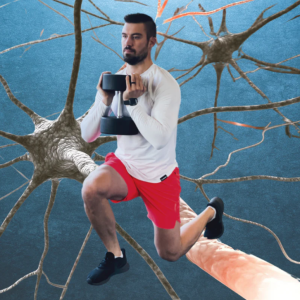
Muscle strength can be influenced by your nervous system in many ways, including:
your ability to move and control all the actions of your body.
The brain sends signals from the central nervous system to the muscles, thus activating groups of muscle fibers called motor units. The more developed and efficient your nervous system is at activating motor units, therefore, dictate how much force can be produced by your muscles.
Another key factor influencing force production from your muscles is how quickly your nervous system sends out signals to activate the muscle fibers (known as firing rate).
Your nervous system also has a built-in safety mechanism that limits the maximum amount of force produced by the muscles to ensure they are protected from injury.
One of the ways this is done is through the Golgi tendon organ. This body part acts like a switch; it limits how much force can be produced by the muscles.
Through continued and consistent strength training, your nervous system will begin to adjust the limit of how much force can be produced by the muscle. Continued strength training will create changes, making the nervous system more confident in allowing the muscles to produce greater amounts of force.
This is one of the reasons why someone who has been strength training for a long time can lift significantly more weight than someone who is a beginner; they typically have larger muscle masses, but the expert’s nervous system is significantly more efficient in activating motor units.
Conclusion
Are you ready to unlock your full potential in strength? Here at Basics and Beyond fitness & nutrition, we have an efficient system that includes: creating custom training plans specifically to suit every person’s physical capabilities, as well as individual needs. And also exceeding expectations through expert nutrition counseling, for both body type and personal preference.
You don’t need to train harder; you just need to have access to knowledgeable professionals who understand the scientific principles involved in helping you reach your goals!
FAQs
Ques. 1. Can I build strength without gaining muscle mass?
Ans: Yes, strength training improves neurological efficiency, allowing for greater force without significant muscle growth. This approach focuses on lower reps and higher weights, a method we specialise in at Basics and Beyond fitness & nutrition in Belmont, Hillsboro Village, and nearby regions.
Ques. 2. What can I do to prevent injury while strength training?
Ans: To prevent injury during your workouts, it is recommended that you keep your form proper, your movements slow and controlled, and that you gradually increase your weights over time. At Basics and Beyond fitness & nutrition, we teach our clients to avoid injuries through correct exercise technique in Belmont, Franklin, and the surrounding areas.
Ques. 3. How is strength training going to benefit me mentally?
Ans: Lifting weights creates endorphins, which reduce stress and make you feel better. Additionally, lifting weights provides a way to manage your mental health in addition to increasing your physical strength. Certified fitness trainers can help to guide you towards both physical and mental fitness.
Ques. 4. Why do I feel weaker after increasing weight in my strength training routine?
Ans: Your muscles may be strong enough to lift it, but your motor units and coordination haven’t yet developed. Strength training isn’t just about how you use your muscles, but how your nervous system performs. It takes time to adjust to new loads; focus on completing controlled reps without progressing too rapidly.