
A lot of people, when they think about sports fitness training, imagine adding more workouts, more weights, and added conditioning. However, great athletes train quite differently from good athletes. It’s not that they train harder or more than others; it’s about how well they train for competition under actual game/competition conditions.
At Basics and Beyond fitness and nutrition, our starting point for training is a simple question: what does the sport require the athlete’s body to do repeatedly while performing?
Each sport has a different requirement in terms of training
One of the more common mistakes that athletes make is assuming that fitness is transferable across sports. It doesn’t. General conditioning is helpful, but each sport has a different way of stressing the body. The rules and equipment are not the only differences, but also how the energy is produced, absorbed, repeated, and recovered over time.
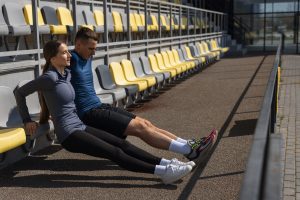
Let’s take ice hockey as an example. Ice hockey requires a significant amount of lower-body power and stamina. Hockey players typically play for three or more minutes straight during their shift (offensive or defensive). Players have to stay in a low position for most of the time during the match, which puts constant stress on the hips, thighs, and core. Training required for this sport also varies. The training needs to build leg strength, balance, and control, especially for side-to-side movement.
Take an example of another sport, like American football. Although it is a sport based on short, powerful movements with breaks between each, training should focus on developing strength, speed of execution, and the ability to produce power very quickly (especially from a standing position). Players will also need to train for contact, stable joints, and the ability to withstand repeated stresses and strains on their bodies; all of these features are just as important as being physically strong. While conditioning does play a role in the overall training plan for all players, it should not be the overall focus of the players’ training. Developing strength, stability, mobility, power output, etc., is the primary focus of the player’s training in this sport.
In the case of baseball, the consistent motions of throwing, swinging, and sprinting will place stress on the shoulder joints. Baseball training should therefore emphasise developing rotational strength in the body, stability of the shoulder joint, and controlling overall body movement. Recovery and injury prevention are equally important components of baseball strength training.
What is Sports Agility and How Can It Benefit You?
Sports agility is something many people think they understand; they do not. Many assume that quick movements of your feet are all you need in sports.
Agility training is designed to allow your body to maintain control during unexpected situations, so you do not panic. Your body should be able to decelerate without falling, accelerate without having to wait, and control your balance even when your reflexes are not quite right.
Soccer is one of the best examples of how agility and endurance work together; soccer players are constantly on the move for long periods of time, but the majority of soccer-related actions take place in short bursts of time. During each phase of the game, a soccer player must be able to change directions, sprint, and react quickly. To develop endurance and agility, training should focus on improving balance and footwork.
In addition, strength training can also help to improve stability during direction changes, help to maintain speed till the end of a match, and reduce the risk of injury as a result of fatigue.
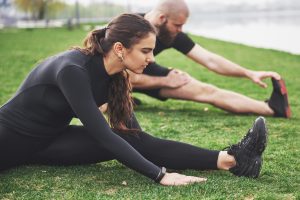
Even though cricket is viewed as a slower-speed game, agility continues to play a significant role in the overall success of the sport. Fielders must have the ability to react quickly to an unpredictable level of the ball as it goes along, needing to have the ability to change direction quickly, and so on.
Conclusion
At the end of the day, there isn’t going to be one type of sports workout that fits every sport. A football player will need different routines than what is suitable for a hockey player. While cricketers will have a completely different set of needs than someone playing soccer. Each of these has different demands on the body, whether it be strength, endurance, speed, or agility. One thing that stands out with this topic is the need to treat sports fitness training with intent; it’s not just about how much you work but how you train for the sport you are performing.
Sports fitness is not only about your physical conditioning, but it is also about being in game-ready condition for whatever sport you are currently participating in.
FAQs: Frequently Asked Questions
Ques. 1. Can I find sports fitness training near me in different areas of Nashville?
Ans: Yes, you can. We are available across Nashville and multiple locations, including Green Hills, Vanderbilt, Belmont, Hillsboro Village, Cool Springs, Franklin, West End, and Downtown Nashville, so you can choose what’s most convenient for you.
Ques. 2. I go to the gym regularly, but I still feel slow during matches. What could be the reason?
Ans. This usually happens when your training isn’t aligned with your sport. Gym workouts build strength, but sports need speed, agility, and quick reactions. Adding sport-specific drills can make a big difference.
Ques. 3. My schedule is unpredictable. How do I manage consistent sports fitness training?
Ans: That’s the big concern for most of the people. This is why at Basics and Beyond fitness and nutrition, our certified sports fitness trainers adjust your plans based on your routine or offer sessions in different locations in and near Nashville.
Ques. 4. I find it hard to react quickly during matches. Can sports fitness training actually improve this?
Ans: Yes, it can definitely be improved with the right approach. At Basics and Beyond fitness and nutrition, we have certified sports fitness trainers who focus on drills that challenge coordination, speed, and decision-making so your body can learn to respond faster in real game situations.
Ques. 5: There is a park named “Centennial Park” near my house. Can a sports fitness trainer provide me with training there?
Ans: Yes. You can get sports fitness training in Centennial Park, too. Because at Basics and Beyond fitness and nutrition, we also provide personal training sessions in-home, outdoors, or in any nearby gym to your location.