
In the world of sports and fitness, an injury is usually seen as something you will get through quickly; you can rest, recover, and then go on to the field, but it is rarely that simple.
For many athletes, though, the biggest challenge is not the pain they feel but how their body responds after the injury. Many times, athletes experience instability or hesitation or fail to have confidence in their movement.
That is why in sports, post-injury balance training is very critical.
Balance training is not just recovering from your injury but rather it is about getting back to the same level of performance as before with confidence and doing better and stronger than before.
Why does body balance get disrupted after the injury?
After an injury, your body goes through a number of changes, and it is far beyond just physical change. And these changes are often gone unnoticed, but they directly affect your balance, coordination, and performance.
Disrupted brain and body coordination: when you undergo an injury, for a long time your body is at rest to heal itself. So your muscles get weak, joint sensors become less active, and the neurological system starts compensating for itself. The signals from the brain to the affected area become unclear. That is why long after the recovery, athletes still feel instability in moving.
Loss of Proprioception: After injury, nerves in the muscles, joints, and ligaments are often damaged, especially when it is a joint injury or a muscle tear. So this nerve damage reduces your body’s ability to sense the positions.
Muscle weakness and coordination: Sports injuries can be very unpredictable; even a minor injury can make your muscles weak. So your body follows a compensation pattern, which means your brain shifts its effort away from the injured area and progressively uses other muscles more. Although this helps you avoid pain initially, but it eventually causes imbalances among your muscle systems over time. You may unintentionally favor one side of your body or restrict your range of motion due to the compensation, which may result in difficulties with both stability and overall balance while doing activity.
Reduced Response Time and Equilibrium:Maintaining balance means more than just being still; it also entails speed. So when you are injured, your ability to respond quickly is reduced, which limits your ability to make any adjustments when something occurs suddenly. This slow reaction will ultimately diminish coordination, decrease performance, and increase the risk of falling when engaging in sports.
Fear and anxiety: Psychological distress after an injury is common; athletes who undergo an injury often end up with a fear of falling again or getting reinjured. So they act cautiously
The solution: What is Post-injury Balance Training For Athletes?
Post-injury balance training for athletes is a specific type of training that is aimed at restoring neuromuscular control, proprioception, and dynamic stability, as well as enhancing sport-specific motion confidence, after an injury.
It is different from traditional rehab training. Because while traditional rehabilitation has primarily focused on pain reduction and strengthening the injury-afflicted area of the body, balance training helps to re-establish the critical connection between the brain, nervous system, and muscles.
Why Do Athletes Need a Specialist for Post Injury Balance Training?

Recovery from injury is one thing; recovery for performance in sports is another thing that matters the most. This is where working with a specialist becomes crucial. A general approach may help you feel better, but a specialist ensures your body is truly ready to perform again.
- Accurate assessment of the cause: There are a number of issues that may not normally be visible after an injury; you may feel fine with everyday activities; however, there may still be quiet instability, poor coordination, or reduced strength. A specialist has the ability to uncover these issues by using movement analysis
- Progressive and structured recovery approach: Balance training is not something you can rush. If done too early or too aggressively, it can increase the risk of re-injury. A specialist follows a structured progress, which starts from basic stability exercises to advanced dynamic drills, ensuring your body adapts safely at every stage. This gradual progression is what rebuilds true strength and confidence.
- Injury prevention and long-term performance: One of the biggest advantages of working with a certified post-injury balance trainer is that the goal is not just recovery; it is preventing the risk of reinjury. By improving joint stability, coordination, and reaction time, balance training also reduces the chances of future injuries. At the same time, it enhances agility, control, and efficiency, which directly improves athletic performance.
- Psychological readiness and confidence building: Returning to sport is not just physical; it is mental. Many athletes hesitate even after recovery because they don’t fully trust their body. A specialist gradually exposes you to controlled challenges that rebuild confidence. As your balance and control improve, your fear reduces, allowing you to perform freely and aggressively again.
What Kind of Post Injury Balance Training Exercises Are Meant for Athletes?
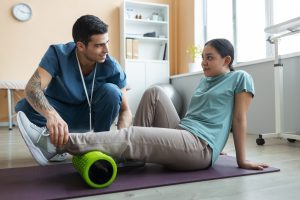
Post injury balance training for athletes is not a one-size-fits-all approach; it completely depends on the type of injury, its severity, and how your body is responding during recovery. An ankle injury, for example, will require a very different balance strategy compared to a knee or hip injury.
However, there are still some common categories of exercises that are widely used to rebuild balance and control.
Single leg stability exercise: These are often the starting point in most recovery programs. Exercises like single-leg stands help rebuild joint stability and muscle engagement. A specialist ensures that your posture, alignment, and muscle activation are correct so that you are not unknowingly compensating during the exercise.
Unstable surface training for progression:In this, tools like balance boards or soft surfaces add controlled instability, forcing your body to adapt. But these are not introduced randomly; a trainer carefully decides when your body is ready for this level of challenge to avoid unnecessary strain or risk.
Dynamic movements: As recovery progresses, exercises like lunges, step-downs, and controlled jumps are introduced. These help your body stay stable while in motion.
Reactive and agility training: sports demand agility; you’re constantly reacting, adjusting, and changing direction in a split second. That’s why balance training also needs to prepare you for the unexpected. A trainer introduces simple reaction-based drills that train your body to respond quickly and stay controlled.
Final Thought
Healing from an injury isn’t just about waiting for the pain to fade. For athletes, real recovery goes way deeper; it’s about regaining your balance, coordination, and trust in your own body. People usually forget how much an injury messes with all of that. If you skip those steps, jumping back into your sport can feel a little imbalanced, maybe even risky.
That’s why balance body training matters so much after an injury. It fills the gap between just getting better and actually getting back on track.
FAQs: Frequently Asked Questions
Ques 1. Where can I get professional post injury balance training in Nashville?
Ans. At Basics and Beyond fitness & nutrition, we offer specialized post-injury balance training for athletes in convenient Nashville locations, including 12 South, Berry Hill, Green Hills, Vanderbilt, and Belmont. Our experienced trainers create personalized programs tailored to your sport and injury.
Ques 2. How soon after an injury should I start balance training?
Ans. It will depend on the type of injury; however, it is recommended that balance training shouldn’t be initiated right after the injury; you should wait for at least 1 to 2 weeks.
Ques 3. Can I do balance exercises on my own at home instead of seeing a trainer?
Ans. Yes, you can do basic exercises at home, but for athletes, self-guided training often misses important progressions and corrections. Working with a specialist makes the process much faster, safer, and more effective.
Ques 4. Does a simple injury like an ankle sprain also need balance training?
Ans. Yes. Even a minor ankle sprain can affect your balance and joint awareness. Without proper balance training, the risk of re-injury remains high.